
A shared kaupapa across the top of the south: RISE's new CEO on working together
The appointment of Maud Molloy as RISE's first Chief Executive marks a significant milestone for the specialist family harm organisation.
The creation of the Chief Executive role reflects the scale and complexity of the work RISE is now leading across the top of the south.
RISE has nearly 40 years' experience supporting individuals, whānau and communities across Whakatū – Nelson, Te Tai o Aorere – Tasman, Kaikōura, and Te Tai Poutini – the West Coast.
Maud brings more than 15 years' leadership experience across the family violence, mental health and disability sectors, with work spanning complex settings in Europe, Asia, Africa and Aotearoa New Zealand. Her career has included direct work with survivors of violence in a range of challenging global contexts, and deep expertise in the prevention of gender-based and sexual violence.
"These experiences shaped how I understand violence," Maud says. "They showed me how deeply culture, systems and trauma influence behaviour, and how crucial it is to respond not just to harm, but to the conditions that allow it to continue."
Stepping into the Chief Executive role is a new chapter that draws on everything that came before it, she says.
"RISE's approach really resonates with me," she says. "It's about the whole whānau (family) and its resilience. It's about accountability and change: working with people who use violence and with those who experience it to break cycles of harm and promote healthy, respectful relationships. It's also about peer support in our communities - about men stepping up and role modelling positive masculinity."
Multi-agency and community leadership at the core
For Maud, the importance of a multi-agency and community-led response cannot be overstated.
"No single organisation can hold every part of the solution. Ending family harm requires a whole-of-system response: health, justice, social services, education, iwi and community all working together, with shared accountability."
Te Aorerekura, Aotearoa New Zealand's National Strategy to Eliminate Family Violence and Sexual Violence, and the national guidelines beneath it, make this clear.
RISE's approach reflects that kaupapa (purpose): working alongside multiple partners so people are met with a connected response, not fragmented services.
"When we pool our expertise, the response becomes as strong and as lasting as the harm we're working to address," Maud says.
That partnership spirit runs through RISE's intervention work, delivered by its trained Clinicians, and through its prevention mahi, including the ACC-funded Hikitia! programme, which Maud sees as one of the organisation's important fronts for lasting change.
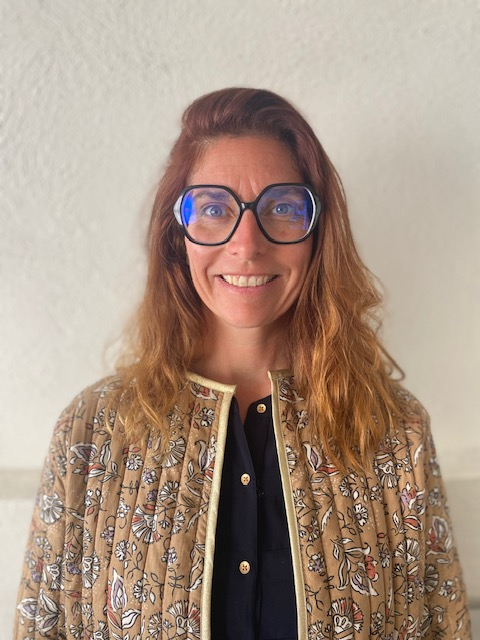
RISE Chief Executive Maud Molloy
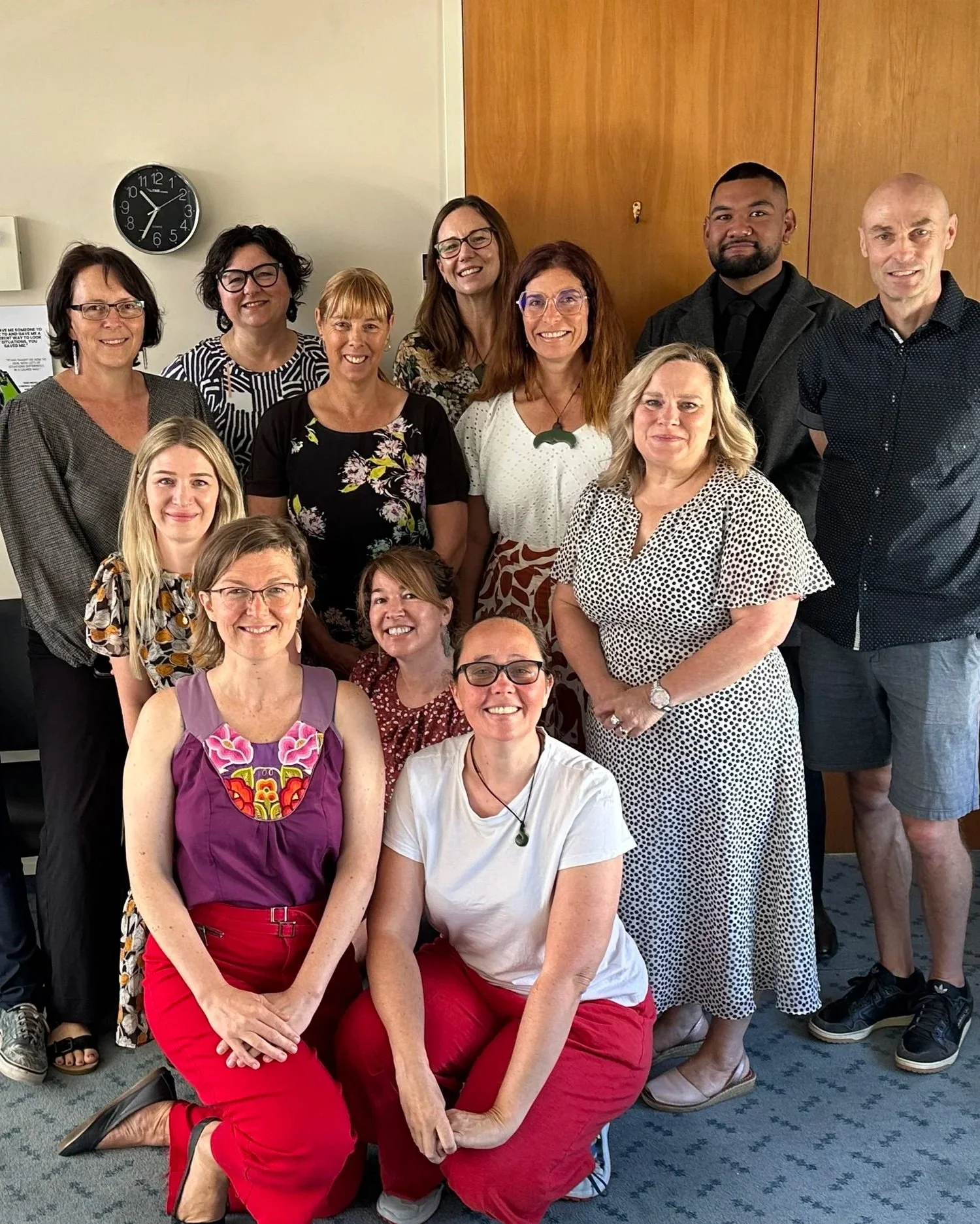
RISE’s wider team and board members welcome Maud Molloy (third from right at back row) to RISE.
Prevention in the online space
Maud's early focus will be on strengthening RISE's prevention capability, particularly in the online environment where so much harm is now taking shape.
That work includes RISE's collaboration with global leader Moonshot on New Zealand's first online violence prevention programme, and its partnership with Australia-based BeThere Group to deliver bystander-capability programmes in Aotearoa workplaces and schools.
The online space, Maud says, is an increasingly critical front in both prevention and intervention. With the rise of the manosphere and algorithmically amplified content promoting harmful, rigid ideas about masculinity, young people, particularly young men and boys, are being exposed to messaging that normalises dominance, contempt for women, and the use of violence and control.
RISE's online prevention work recognises that countering these narratives requires an active, engaging presence in the very spaces where those messages spread, as well as pathways for bystanders, victims, and for users who want to find a way out. By partnering with Moonshot, RISE is reaching people where they are, online, and offering alternative visions of masculinity grounded in strength through respect, connection and accountability, rather than dominance and control.
"Prevention is where we can make lasting change," Maud says. "That means innovation, evidence-based practice, and strong partnerships in the response space too."
Te Tiriti and te ao Māori
Maud is also stepping into RISE's ongoing commitment to Te Tiriti o Waitangi.
She is keen to support RISE's journey towards more active bicultural practice, and to help grow the organisation's connections and participation with iwi across the region. She was thrilled to learn RISE has its own waiata and karakia and says she is humbled and grateful to deepen her understanding of te ao Māori in her new role.
Nelson, and a personal return
Originally from France, Maud's move to Nelson is also a personal one. Her husband, a New Zealander, has his whānau in Golden Bay, and the couple have long planned a return to the region. After spending a couple of years in Golden Bay, "We're really happy to be part of this sunny and welcoming community of Whakatū," she says.
A favourite whakataukī of Maud's captures the spirit she sees at the heart of RISE's work: "Ehara taku toa, i te toa takitahi, engari he toa takitini": My strength is not that of an individual, but that of many.
"That's what this kaupapa asks of all of us," she says. "And it's what I'm here to help build on."